
September 16, 2026
The roster shows who is on. It rarely shows who is already on overtime.
Coverage answers whether the hole is filled. It almost never answers whether the person filling it is already into forced overtime. Those are different readiness facts. Most boards treat them as one.
Ask whether tonight’s engine is covered and you get a yes or a no. Ask whether the person filling that hole is already into forced overtime, on a callback after a 48, or trading rest for coverage — and a lot of boards go quiet.
Those are different questions. Fatigue research already treats them that way. Most roster screens do not.
What the evidence actually says
A 2023 systematic review of occupation-induced fatigue in emergency first responders (43 studies, 6,373 firefighters, paramedics, and related personnel) found the main drivers were lack of sleep during the shift and consistently poor sleep quality. Downstream effects included reduced cognitive function and alertness, worse physical and mental health, and more safety-compromising behaviors and injuries (Barger and colleagues’ literature sits in the same lane; the review is in the International Journal of Environmental Research and Public Health, PMC10671419).
That is not a soft HR finding. It is an operational one. The person who looks “covered” on the board may already be carrying the kind of sleep debt the literature associates with poorer judgment and higher injury risk.
Shift design matters too. Billings and colleagues (Safety Science, 2023) measured daily sleepiness across firefighters on 24/48 and 48/96. Sleep propensity varied by tour and tracked prior-night total sleep time. The practical point for a chief is smaller than the schedule debate: how someone arrived at this tour — rested, or already short — changes what “on the line” means.
EMS has been saying a version of this for years. Patterson and colleagues’ multi-agency survey work classified a large share of EMS workers as fatigued and linked fatigue to safety outcomes. The board that only answers headcount never sees that variable at the moment of the fill.
What this does not say
It does not say overtime is always wrong. Forced hire is how many departments keep a company in service when leave, training, and injury open holes. The claim is narrower: overtime is a readiness input, not just a payroll line.
It does not say a score should decide who rides. Judgment stays with the officer. The gap is that the input often never arrives before the decision.
It does not repeat last week’s credential point as if it were the same fact. Currency asks whether the person is still allowed to hold the seat. Overtime asks what load they are already carrying when they take it. Both sit beside fatigue and night-four. None of them show up if the only question the screen can answer is “is the hole filled.”
The operational gap
The roster answers coverage. It almost never answers load: who is already into mandatory overtime, who is on a consecutive tour past policy, who traded rest for the fill.
The person filling a hole at 0400 will use whatever is on the screen. If overtime history lives in payroll, a paper callback list, or the battalion chief’s head, it is not part of the decision.
What a leader can actually ask for
You do not need a new system to start. You do need a way to see, at the moment of the decision:
- Who is assigned to the seat, and whether they are already into forced overtime or a consecutive tour
- Whether “covered” and “still carrying overtime load” are being answered in the same place
- How often mandatory overtime is the only tool keeping minimum staffing
Not a rule that bans overtime. An input that arrives before the tones.
Parallax ORP is being built around a broader definition of readiness than coverage: trained, current, rested, qualified. On this specifically, the goal is to make load visible enough to weigh. It does not replace a labor agreement, a medical director, or a staffing policy.
When you look at tonight’s line, can you see which names are already into overtime before you call them again?
Sources
Occupation-Induced Fatigue and Impacts on Emergency First Responders: A Systematic Review (2023), Int. J. Environ. Res. Public Health, PMC10671419 (43 studies; 6,373 participants). Billings J. et al. (2023), Daily variation in sleepiness among firefighters while working the 24/48 and 48/96 shift schedules, Safety Science, doi:10.1016/j.ssci.2023.106335. Patterson PD et al., multi-agency EMS fatigue survey literature (Prehospital Emergency Care). Related live posts: https://www.parallaxorp.com/blog/the-roster-does-not-show-night-four and https://www.parallaxorp.com/blog/the-roster-names-the-seat-not-the-credential.
Related posts
September 18, 2026
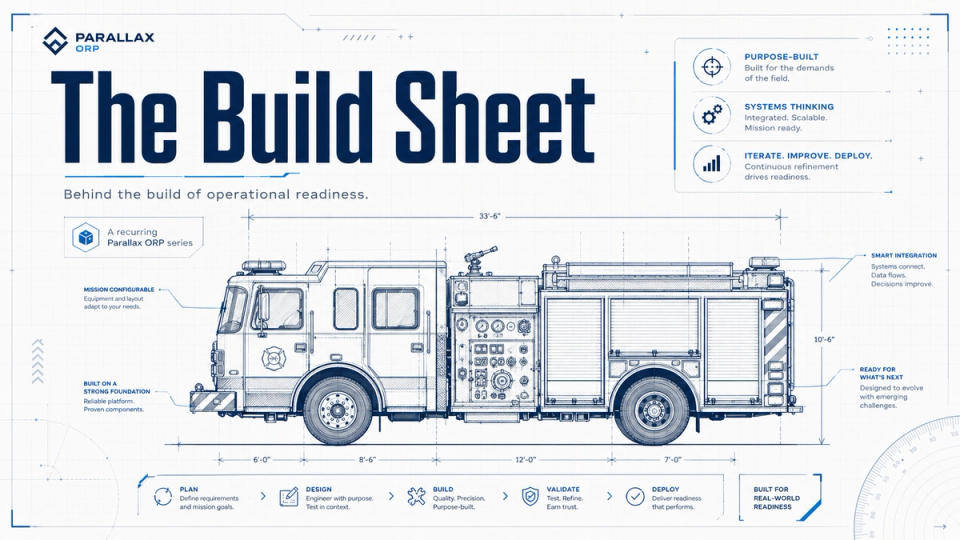
The Build Sheet #3: A change without an author is a record you cannot defend
Status without a reason. Date without a source. Next gap in the same record: a change with no author. Six months later you know something moved. You cannot say who moved it, or whether anyone should still trust it.
September 4, 2026
The Build Sheet #2: A date without a source is a fact you cannot trust later
Last week: a status without a reason. Next gap in the same record: a date with no source. March 31 in a cell is not the same fact as March 31 from the Registry, the state office, or someone’s memory.
September 2, 2026
The roster can name the person in the seat. It often cannot say if they are still current for it.
A filled line answers coverage. It does not answer whether the person in that seat is still current for the assignment. The standards already treat those as different facts. Most rosters do not.